

Textile-to-Textile Recycled Polyester & Recycled Nylon Fabric
Textile-to-textile recycled polyester and textile-to-textile recycled nylon represent the next frontier in circular fashion materials—taking discarded garments and textile production waste and turning them back into high-quality fiber. Unlike conventional “bottle-to-fiber” recycling, textile-to-textile recycling (also known as fiber-to-fiber recycling or fibre-to-fibre recycling) solves the textile waste problem at its source: old clothes and factory offcuts no longer go to landfill or incineration—they re-enter the supply chain as valuable closed-loop recycled polyester and closed-loop recycled nylon yarn. For brands, this is the critical step from linear to circular.
Key characteristics of textile-to-textile recycled polyester and nylon fabrics include:
True Closed-Loop Circularity: Textile waste is recycled back into textile fiber—a genuine “garment-to-garment” closed loop that goes beyond “bottle-to-garment” to address the textile industry’s own waste stream. This is circular polyester textile material and circular nylon textile material in its purest form.
Full Supply-Chain Traceability: Fone Tai’s textile-to-textile recycled yarns come with complete chain-of-custody traceability—from textile waste collection and sorting through reprocessing to finished yarn—giving brands a verifiable, defensible circularity story.
Blended-Fabric Processing Capability: Advanced recycling technology can process blended textile waste (poly/cotton, nylon/elastane, etc.), separating mixed fibers for independent recycling—dramatically expanding the range of recyclable textile waste and overcoming the “blends can’t be recycled” bottleneck.
Consistent Quality, No Compromise: Whether via chemical recycling or mechanical recycling with re-polymerization, the resulting recycled polyester fabric from textile waste and recycled nylon fabric from textile waste match virgin fiber in strength, dyeability, and hand feel—brands don’t sacrifice product quality for circularity.
Diverting Textile Waste from Landfill: Tens of millions of tons of textile waste reach landfill or incineration annually worldwide. Textile-to-textile recycling polyester and textile-to-textile recycling nylon convert this waste directly into valuable yarn feedstock—the most direct route to solving the textile waste problem.
From “Bottle-to-Garment” to “Garment-to-Garment”: The Circular Upgrade
As a leading supplier of fiber-to-fiber recycled polyester and fiber-to-fiber recycled nylon fabrics, Fone Tai understands where the market is heading: brands’ next chapter isn’t just about “bottle-to-garment” recycled content—it’s about “garment-to-garment” circularity. rPET from plastic bottles is a mature solution, but it addresses plastic-bottle waste, not textile waste. Textile-to-textile recycling is the circular-economy answer to the textile industry’s own waste challenge.
For the growing number of international brands that want a “circularity narrative”—not just “recycled content”—textile-to-textile delivers a more compelling story: “This fabric is made from old clothes” carries more circular weight than “This fabric is made from plastic bottles.” Sustainable polyester for apparel brands and sustainable nylon for apparel brands now means true closed-loop sourcing.
A Closer Look: What Is Textile-to-Textile Recycling?
Textile-to-textile recycling (also called fiber-to-fiber or fibre-to-fibre recycling) takes discarded textiles—post-consumer garments, factory cuttings, deadstock—and reprocesses them into polyester or nylon fiber. Two primary pathways:
Chemical Recycling: Textile waste is depolymerized (via glycolysis, hydrolysis, or similar processes) back to monomer, then re-polymerized into fiber that matches virgin quality. Can process blended waste. Highest quality consistency.
Mechanical Recycling + Re-polymerization: Textile waste is shredded, cleaned, melted, and re-spun. Lower cost; best suited for single-composition waste. Some processes include a re-polymerization step to restore fiber quality.
Regardless of pathway, the resulting fiber meets virgin-grade standards in strength, dyeability, and hand feel. Brands achieve recycled polyester for circular fashion and recycled nylon for circular fashion without compromising product performance.
Core Features & Technical Advantages
Fone Tai’s textile-to-textile recycled fabrics are purpose-engineered to deliver a true closed-loop circular solution.
Traceable Textile-Waste Sourcing: Every textile-to-textile recycled yarn we supply comes with full chain-of-custody traceability—from waste collection through reprocessing to finished yarn—so brands’ circularity claims are backed by real, verifiable data.
Blended-Waste Processing: Advanced recycling technology handles multi-fiber blended textile waste, dramatically expanding the recyclable feedstock pool and overcoming the long-standing “blends can’t be recycled” barrier.
Virgin-Grade Quality Consistency: Chemical or mechanical + re-polymerization processes produce fiber-to-fiber recycled polyester for fabrics and fiber-to-fiber recycled nylon for fabrics that match virgin fiber in strength, dyeability, and hand feel—no quality trade-off for circularity.
A More Compelling Circularity Narrative: “This fabric is made from old clothes” resonates more powerfully with consumers and stakeholders than “This fabric is made from plastic bottles.” Textile-to-textile gives brands the upgrade in sustainability storytelling they need.
Seamless Integration with Fone Tai’s Eco Product Line: Textile-to-textile recycled fabrics pair naturally with Fone Tai’s recycled spandex, PFAS-free DWR, sustainable TPU film, and other eco-products—delivering end-to-end sustainability from yarn to finish.
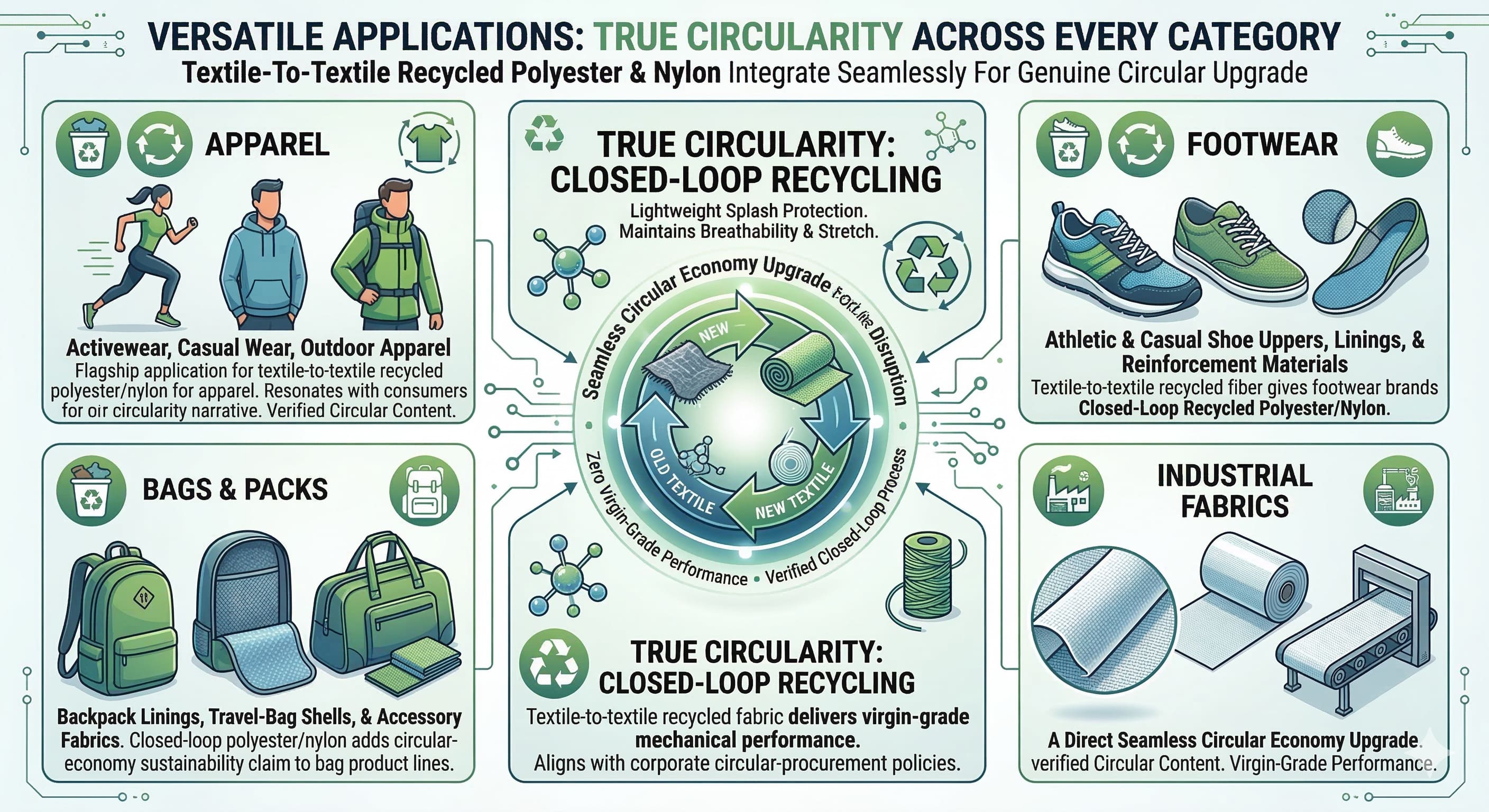
Versatile Applications: True Circularity Across Every Category
Textile-to-textile recycled polyester and nylon integrate into every application currently using virgin or bottle-recycled polyester and nylon, delivering a genuine circular upgrade.
Apparel: Activewear, casual wear, and outdoor apparel—the flagship application for textile-to-textile recycled polyester for apparel and textile-to-textile recycled nylon for apparel. This is where the circularity narrative resonates most powerfully with consumers.
Footwear Uppers & Linings: Athletic and casual shoe uppers, linings, and reinforcement materials. Textile-to-textile recycled fiber gives footwear brands verified circular content in their products.
Bag Linings & Bag Fabrics: Backpack linings, travel-bag shells, and accessory fabrics. Closed-loop recycled polyester and closed-loop recycled nylon add a circular-economy sustainability claim to bag product lines.
Industrial Fabrics: Filtration media, packaging substrates, and conveyor materials. Textile-to-textile recycled fabric delivers virgin-grade mechanical performance while aligning with corporate circular-procurement policies.
Textile-to-Textile vs. Bottle-to-Fiber (rPET): Complementary, Not Competing
A common question: “We already use rPET—why switch to textile-to-textile?” The answer: they’re complementary strategies, not competing ones.
rPET (bottle-to-fiber) diverts plastic-bottle waste from landfill and ocean—solving a plastic-waste problem.
Textile-to-textile recycling diverts textile waste from landfill and incineration—solving the textile industry’s own waste problem with a true garment-to-garment closed loop.
Brands can use both. But the unique value of textile-to-textile is the circularity narrative: “garment-to-garment” is the sustainability story upgrade brands need next.
Partner with Fone Tai—Build a Greener Future Together
Choosing Fone Tai’s textile-to-textile recycled polyester and recycled nylon fabrics is the key step from “recycled content” to “circularity narrative.” When consumers increasingly ask “Where do my old clothes go?”—textile-to-textile is the most powerful answer.
Fone Tai’s core R&D advantages—traceable sourcing, blended-waste processing capability, and virgin-grade quality consistency—help brands move faster and more confidently on their circular-economy journey.
As a trusted circular textile material supplier offering full OEM / ODM customization, Fone Tai is ready to develop the right specification for your application.
Get in touch with Fone Tai today to explore custom textile-to-textile recycled fabric solutions, request samples, and discuss your specification requirements. Let us be your trusted partner in building a more sustainable—and more successful—future.