

Bio-Based PU & Nylon Functional Fabric
Bio-based PU and bio-based nylon functional fabric upgrades both core components of traditional technical textiles—the polyurethane (PU) coating and the nylon (polyamide) base fabric—to plant-derived raw materials in a single integrated solution. Bio-based polyurethane uses plant-based polyols (such as castor-oil-derived) to replace petroleum monomers in the coating; bio-based polyamide (PA11, PA56, PA410) uses renewable plant feedstocks for the fiber itself. Together, they let brands go “de-fossil” from substrate to surface—delivering sustainable PU and nylon materials with zero performance compromise.
Key characteristics of bio-based PU / nylon functional fabrics include:
Lower Petrochemical Dependence, Reduced Carbon at Source: Both bio-based PU and bio-based nylon replace part or all of their petroleum-derived monomers with plant-based alternatives, effectively lowering carbon footprint. This is the most direct path to “de-fossilization” in the functional-fabric space—a genuine low-petrochemical textile material and plant-based performance material.
Full Functional Performance Retained: Bio-based polyurethane coating maintains excellent hydrolysis resistance, weatherability, softness, and adhesion; bio-based polyamide fabric retains outstanding abrasion resistance, high tensile strength, and durability. Brands don’t sacrifice an ounce of performance for sustainability. A truly sustainable functional fabric.
Substrate-to-Surface Sustainability: The combination of bio-based PU coated fabric on top and bio-based nylon textile underneath means the entire functional fabric can claim verified bio-based content—the most complete de-fossil solution for technical textiles on the market today.
High Abrasion & Strength: Bio-based nylon inherits conventional nylon’s legendary abrasion and tear resistance; bio-based PU coating delivers exceptional surface wear protection. Together they form a high-abrasion-resistant bio-based nylon and durable bio-based coated fabric combination purpose-built for demanding applications.
Customizable Bio-Based Content: Both the PU coating and the nylon base fabric can be specified with different bio-based content levels—from partially bio-based polyurethane (partly bio-based polyurethane) to high bio-content options—giving brands maximum flexibility to balance sustainability targets and cost structure.
Bio-Based PU / Nylon: De-Fossilize Your Functional Fabric from Substrate to Surface
As a leading bio-based PU fabric and bio-based nylon fabric supplier, Fone Tai understands that half-sustainable functional fabric isn’t sustainable enough. Many brands have switched the base fabric to recycled yarn but kept petroleum-based PU coating; or adopted bio-based PU but left the nylon substrate untouched. Fone Tai’s solution: bio-based PU coating + bio-based nylon base fabric—both layers upgraded in one integrated package for the most complete de-fossil functional fabric.
A Closer Look: What Are Bio-Based PU and Bio-Based Nylon?
Bio-Based PU (Bio-Based Polyurethane):
Plant-based polyurethane produced by replacing petroleum-derived polyol monomers with plant-derived alternatives (e.g., castor-oil or corn-starch-based polyols). Bio-based content is adjustable per specification—from partially bio-based polyurethane to high bio-content formulations. Used for bio-based polyurethane coating, lamination, and synthetic leather applications.
Bio-Based Nylon (Bio-Based Polyamide):
Polyamide fiber synthesized from renewable plant feedstocks. Common grades: PA11 (100% bio-based, from castor oil), PA56 (40–45% bio-based, from corn starch), PA410 (~70% bio-based, from castor oil). All retain conventional nylon’s high abrasion resistance, tensile strength, and weatherability. A true renewable nylon fabric and renewable-source nylon.
When paired, the “base fabric + coating” combination both use plant-derived raw materials—the most complete de-fossil solution available in the functional-fabric category today.
Core Features & Technical Advantages
Fone Tai’s bio-based PU / nylon functional fabrics are purpose-engineered for brands that want to de-fossilize their products from substrate to surface.
Dual De-Fossilization—Substrate + Coating: Bio-based polyamide fabric base + bio-based PU coated fabric top—the entire functional fabric achieves plant-based raw material substitution. The most complete sustainable PU and nylon materials solution for technical textiles.
Full Performance Parity: Bio-based PU coating’s hydrolysis resistance, weatherability, softness, and adhesion, plus bio-based nylon’s abrasion, strength, and durability, all match conventional petroleum-based equivalents. No quality trade-offs.
High Abrasion & High Strength: Bio-based nylon delivers nylon-grade abrasion and tear resistance; bio-based PU coating adds surface wear protection. An abrasion-resistant bio-based fabric for footwear and durable bio-based fabric for backpacks that stands up to real-world use.
Verified Bio-Based Content: Third-party certification or bio-content declarations available for both coating and base fabric, providing concrete data to support sustainability marketing claims.
Independently Customizable Layers: Base fabric (PA11, PA56, PA410, or other eco yarns) and coating (various bio-based PU content levels) can be specified independently via full OEM / ODM service—maximum flexibility to match your sustainability targets and budget.
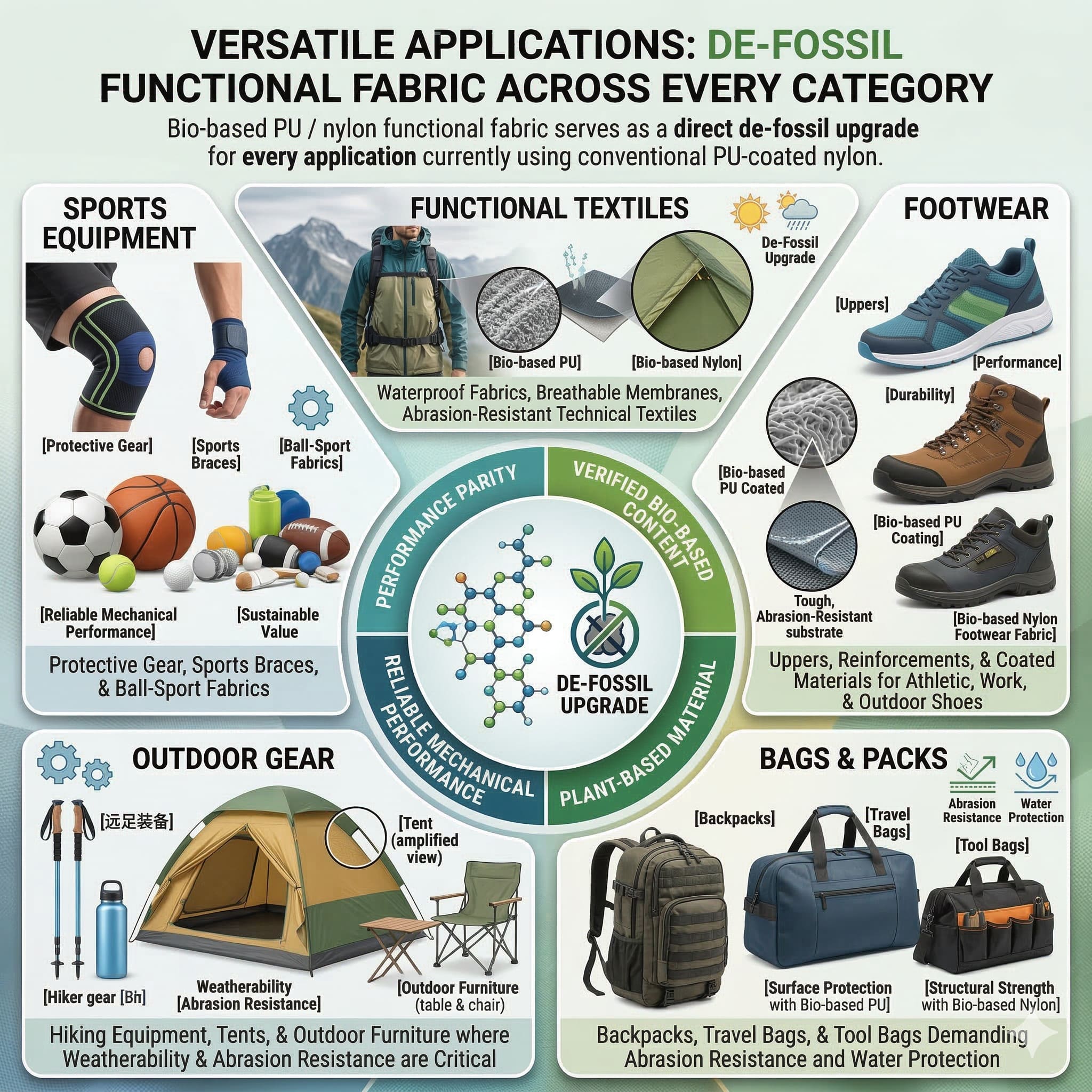
Versatile Applications: De-Fossil Functional Fabric Across Every Category
Bio-based PU / nylon functional fabric serves as a direct de-fossil upgrade for every application currently using conventional PU-coated nylon.
Functional Textiles: Waterproof fabrics, breathable membranes, and abrasion-resistant technical textiles. Bio-based PU for functional textiles and bio-based nylon for functional fabrics deliver the same performance as conventional materials with verified bio-based content. A high-performance bio-based textile for outdoor gear and beyond.
Footwear: Uppers, reinforcements, and coated materials for athletic, work, and outdoor shoes. Bio-based PU for footwear provides weather-resistant coating; bio-based nylon for footwear provides tough, abrasion-resistant substrate. Together: high-abrasion-resistant bio-based nylon footwear fabric at its best.
Bags & Packs: Backpacks, travel bags, and tool bags demanding abrasion resistance and water protection. Bio-based PU coated fabric for bags provides surface protection; bio-based nylon fabric for bags provides structural strength. A sustainable coated fabric for bags that delivers on both performance and sustainability.
Outdoor Gear: Hiking equipment, tents, and outdoor furniture where weatherability and abrasion resistance are critical. Bio-based PU / nylon provides performance parity with conventional materials while delivering plant-based performance material credentials.
Sports Equipment: Protective gear, sports braces, and ball-sport fabrics. Bio-based functional fabric delivers reliable mechanical performance and sustainable value for the sporting-goods industry.
Partner with Fone Tai—Build a Greener Future Together
Choosing Fone Tai’s bio-based PU and bio-based nylon functional fabric is the most direct way to de-fossilize your functional-fabric products from substrate to surface. When brands want nylon’s abrasion + PU’s coating performance while lowering petrochemical dependence, bio-based PU / nylon is the answer.
Fone Tai offers independently customizable base-fabric and coating combinations—so brands in functional textiles, footwear, bags, outdoor gear, and sports equipment can find the right bio-based solution for their exact application.
As a trusted plant-based polyurethane and plant-based nylon supplier offering full OEM / ODM customization, Fone Tai is ready to develop the right specification for your application.
Get in touch with Fone Tai today to explore custom bio-based PU / nylon functional fabric solutions, request samples, and discuss your specification requirements. Let us be your trusted partner in building a more sustainable—and more successful—future.