

Bio-Based PET Fabric | Low-Carbon Polyester
Bio-based PET (bio-based polyester) is the next generation of sustainable PET material, produced by replacing part or all of the petroleum-based monomers with plant-derived feedstocks—such as sugarcane-based Bio-MEG—or carbon-capture-derived raw materials. Because the resulting polymer is chemically identical to conventional PET, bio-based PET is a true drop-in replacement: hand feel, tensile strength, dyeing and finishing processes all stay the same. For brands, that means zero learning curve and the fastest possible path to a lower-carbon polyester fabric.
Key characteristics of bio-based PET fabrics include:
True Drop-In Replacement: Bio-based PET shares the exact same chemical structure as conventional PET. Hand feel, mechanical strength, and dye-uptake behavior are identical—brands can switch to this eco-friendly polyester material without changing existing production lines, colorways, or finishing recipes.
Lower Carbon Footprint: By sourcing monomers from renewable PET material pathways—plant-based Bio-MEG or carbon-capture technology—bio-based PET significantly reduces cradle-to-gate carbon emissions, giving brands concrete, quantifiable decarbonization data.
Stable Supply, Full Traceability: Fone Tai’s bio-based PET yarns come with Mass Balance certification or bio-content declarations, ensuring verified, traceable sustainable content throughout the supply chain.
Identical Performance: High tensile strength, abrasion resistance, UV stability, and dimensional stability—every mechanical property matches conventional PET. Sustainability requires zero performance trade-offs.
Universal Process Compatibility: Fully compatible with existing dyeing, coating, and lamination processes. Can also be blended with rPET, bio-based nylon, and other sustainable yarns to create multi-material eco-friendly polyester fabrics.
Bio-Based PET Fabric: The Drop-In Sustainable Polyester Brands Love
As a leading bio-based PET manufacturer and sustainable polyester manufacturer, Fone Tai is dedicated to delivering sustainable polyester fabric solutions that require zero adjustment from brands. Our Bio-based PET and Bio-MEG yarns come with Mass Balance certification or verified bio-content declarations—giving your sustainability marketing real, defensible numbers.
What Is Bio-Based PET?
Bio-based PET (bio-based polyethylene terephthalate) is produced by replacing part or all of conventional PET’s petroleum-derived monomers with plant-based or carbon-capture-derived alternatives, then polymerizing them through the same process used for standard PET. The two primary technology pathways:
Bio-MEG Pathway: The monoethylene glycol (MEG) component is sourced from sugarcane ethanol, yielding approximately 30% bio-based content. This is the most mature, most widely adopted bio PET route, already specified by major global brands.
Carbon-Capture Pathway: Industrial CO₂ emissions are captured and converted into PET monomers. This route not only reduces fossil-fuel feedstock use but actively consumes industrial carbon emissions—unlocking the potential for a net-negative carbon footprint.
Regardless of pathway, the resulting bio-based polyester is chemically identical to petroleum-based PET. That means:
Same hand feel—end consumers can’t tell the difference
Same strength—mechanical test results match conventional PET
Same dyeing and finishing—existing formulas and processes carry over directly
Zero adoption barrier—no product redesign, no production-line changes required
Core Features & Technical Advantages
Fone Tai’s bio-based PET fabrics are engineered to deliver a truly seamless sustainable transition for brands.
Stable, Traceable Bio-Based Content: Every bio-based PET yarn we supply comes with Mass Balance certification or a bio-content declaration. Brands get concrete, defensible proof of sustainable content—and a stable supply chain that won’t disrupt lead times.
Performance Parity with Conventional PET: Tensile strength, abrasion resistance, UV resistance, and dimensional stability are identical to petroleum-based PET. No performance compromises—period.
Full Process Compatibility: Existing dyeing, finishing, coating, and lamination recipes work as-is. No additional sampling costs, no extended development timelines—brands can move fast.
Dual Decarbonization Pathways: We support both Bio-MEG (plant-based) and carbon-capture routes, so brands can choose the low-carbon polyester strategy that best fits their sustainability roadmap and market positioning.
Volume-Ready for High-Usage Applications: For bag fabrics, lining materials, footwear textiles, and industrial fabrics—where volumes are high and consistency is critical—Fone Tai guarantees stable capacity and reliable delivery, so your sustainable transition doesn’t hit a supply bottleneck.
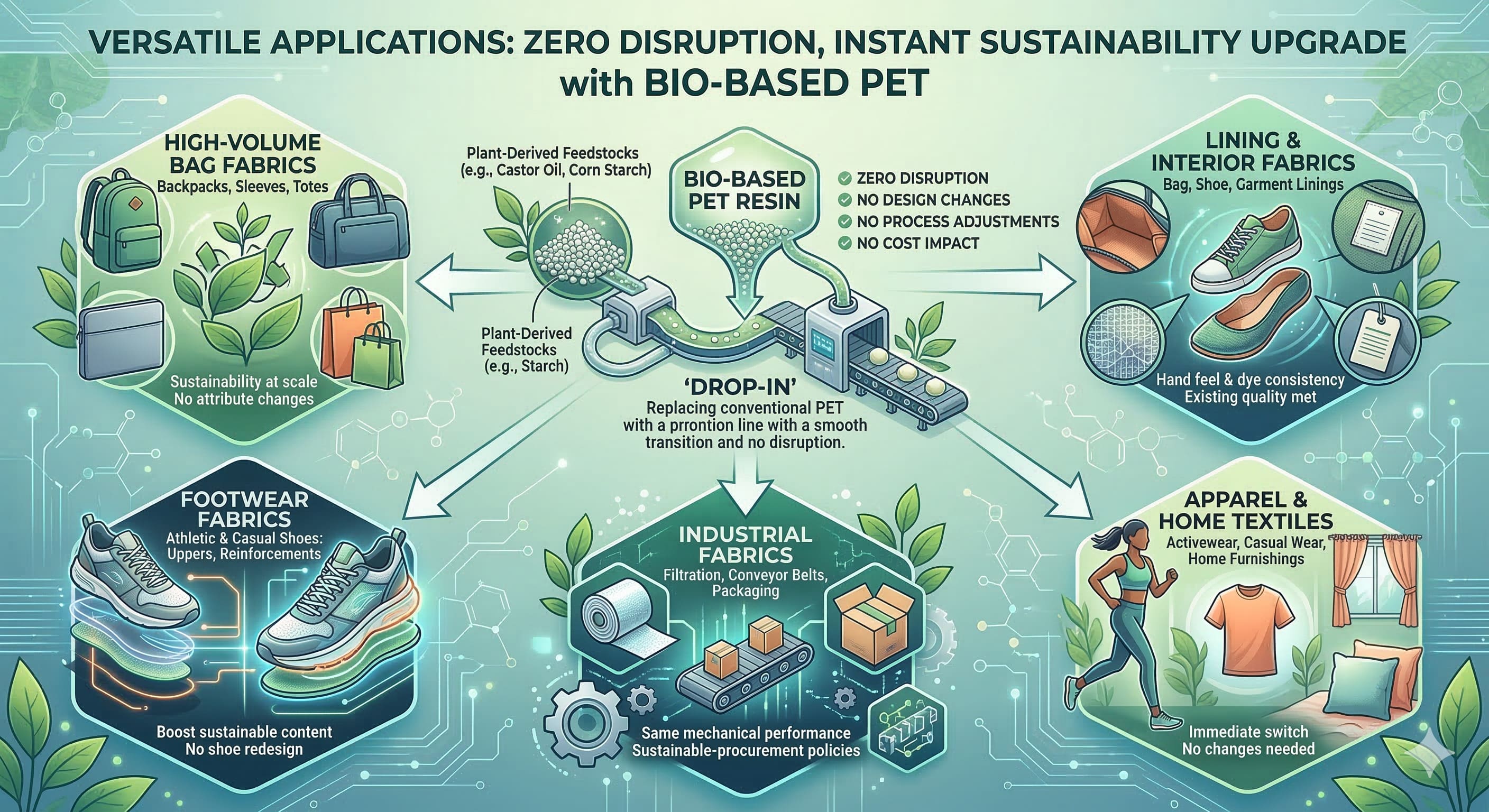
Versatile Applications: Zero Disruption, Instant Sustainability Upgrade
Because bio-based PET is a genuine drop-in replacement, it integrates seamlessly into every application currently using conventional PET—with no design changes, no process adjustments, and no cost-structure impact.
High-Volume Bag Fabrics: Backpacks, travel bags, laptop sleeves, and shopping bags—high-yardage applications where bio-based polyester fabric delivers sustainability at scale without affecting any product attribute.
Lining & Interior Fabrics: Bag linings, shoe linings, and garment linings where hand feel and dye consistency matter most. Bio-based PET’s drop-in nature is especially compelling here—existing quality standards are met automatically.
Footwear Fabrics: Uppers, linings, and reinforcement materials for athletic and casual shoes. Brands can boost sustainable content without redesigning the shoe or altering their manufacturing process.
Industrial Fabrics: Filtration media, conveyor belts, and packaging substrates. Bio-based PET delivers the same mechanical performance as conventional PET while satisfying increasingly strict corporate sustainable-procurement policies.
Apparel & Home Textiles: Activewear, casual wear, and home furnishing fabrics. Brands can switch to sustainable polyester fabric immediately—no design, process, or cost-structure changes required.
Bio-Based PET vs Recycled PET: Complementary, Not Competing
A common question from brands: “We already use rPET—why do we need bio-based PET too?” The answer is that these are complementary sustainability strategies, not competing ones:
Recycled PET (rPET) addresses the waste-end problem—diverting existing plastic waste from landfills and oceans back into the supply chain.
Bio-based PET addresses the feedstock-end problem—replacing virgin fossil-fuel raw materials with renewable or carbon-captured alternatives from the very start of the value chain.
The two can be combined for a more complete sustainability strategy. And bio-based PET’s biggest advantage? It’s the lowest-barrier, fastest-to-adopt sustainable PET material available—because it’s a true drop-in with zero process changes.
Partner with Fone Tai—Build a Greener Future Together
Choosing Fone Tai’s bio-based PET and low-carbon polyester fabrics isn’t just a material decision—it’s the lowest-risk, fastest path to a sustainable polyester transition. When brands want PET performance with lower petrochemical dependence and zero operational disruption, bio-based PET is the most direct answer.
As a trusted bio-based PET supplier and low-carbon PET manufacturer, Fone Tai’s core R&D advantage—stable supply, full traceability (Mass Balance / bio-content declaration)—gives brands real, defensible sustainability data to back up every marketing claim.
We offer full OEM / ODM customization for wholesale bio-based PET fabric orders.
Get in touch with Fone Tai today to explore custom bio-based polyester fabric solutions, request samples, and discuss your specification requirements. Let us be your trusted partner in building a more sustainable—and more successful—future.