

Biodegradable Fabric & Nonwoven for Medical & Industrial Disposables
Biodegradable fabric and biodegradable nonwoven fabric are produced from polymers that can be broken down by microorganisms under specific environmental conditions—such as PLA, PBAT, and starch-based composites. Designed specifically for medical, industrial, and hygiene “disposable / single-use” applications, these biodegradable textile materials maintain full functional performance during use, then decompose under industrial composting or controlled conditions after disposal. The result: dramatically less disposable textile waste reaching landfill, and significantly lower microplastic pollution risk—a true microplastic-reducing textile and low-impact disposable textile.
Key characteristics of biodegradable fabric and nonwoven include:
Biodegradable, Reducing Landfill Burden: Under industrial composting or controlled environmental conditions, the fabric is broken down by microorganisms—unlike conventional synthetic fibers that persist in the environment for centuries. For medical and industrial settings that generate massive volumes of disposable waste, this is the critical lever for reducing environmental impact. A genuinely biodegradable disposable fabric and single-use biodegradable fabric.
Lower Microplastic Risk: Conventional synthetic fibers generate microplastics as they degrade. Biodegradable materials break down into water, CO₂, and biomass—dramatically reducing microplastic contamination risk. A true biodegradable nonwoven material that serves as a biodegradable protective material without creating persistent pollution.
Full Functional Performance During Use: Biodegradable fabrics maintain adequate strength, barrier properties, and breathability throughout the product’s service life—meeting the rigorous functional demands of medical, industrial, and hygiene applications without compromise. This is a sustainable medical fabric and biodegradable technical textile built for real-world use.
Purpose-Built for Disposable / Single-Use Scenarios: Designed for “use and discard” applications including surgical gowns, isolation gowns, drapes, wipes, industrial cleaning cloths, and single-use protective garments—letting brands introduce sustainable disposable textile materials into high-volume consumable product lines.
Aligned with Global Sustainable Procurement Trends: As hospitals, healthcare systems, and industrial enterprises increasingly mandate sustainable procurement, biodegradable disposable materials are becoming the new sourcing standard. An environmentally friendly disposable fabric for forward-looking organizations.
Biodegradable Fabric: Making Disposables Sustainable
As a leading biodegradable fabric and biodegradable nonwoven supplier, Fone Tai understands that disposable textiles are among the hardest textile waste streams to recycle—they’re typically contaminated and cannot enter conventional recycling. Biodegradable materials offer a different end-of-life pathway: instead of persisting in landfill for centuries, these eco-friendly disposable fabric products decompose under controlled conditions, returning to the environment without leaving permanent waste behind.
A Closer Look: What Is Biodegradable Fabric?
Biodegradable fabric and biodegradable nonwoven are made from polymers that microorganisms can decompose under specific conditions. Common raw materials include:
PLA (Polylactic Acid): Produced from corn-starch fermentation. Biodegrades under industrial composting conditions. The most mature and supply-stable biodegradable fiber material available today.
PBAT: A petroleum-based biodegradable polymer with excellent softness and flexibility. Often blended with PLA to improve fabric drape and processability.
Starch-Based Composites: High bio-based content, relatively fast decomposition rate.
Other Biodegradable Polymers: PHA, PBS, and others selected based on specific application performance requirements.
Important note: “biodegradable” does not mean “decomposes anytime, anywhere.” These materials maintain full performance under normal use and storage conditions. Decomposition is triggered only under industrial composting or specific microbial environments—brands don’t need to worry about products breaking down on the shelf or during use.
Core Features & Technical Advantages
Fone Tai’s biodegradable fabric and nonwoven solutions are purpose-engineered to deliver both functional performance and verified environmental benefit for disposable applications.
Certifiable Biodegradability: Our biodegradable fabrics can be certified to international standards (EN 13432, ASTM D6400, etc.), giving brands concrete, defensible environmental data. A biodegradable hygiene fabric and biodegradable medical nonwoven fabric with verified credentials.
Full In-Use Performance: Adequate strength, barrier properties, breathability, and softness throughout the product’s intended service life—meeting rigorous medical and industrial requirements.
Reduced Microplastic Contamination: Decomposition products are water, CO₂, and biomass—not microplastics. A genuine microplastic-reducing textile alternative.
Multiple Materials & Processes: PLA, PBAT, starch-based composites, and other biodegradable polymers available. Spunbond nonwoven, meltblown nonwoven, and woven constructions supported—flexible material-process combinations for every application. A versatile biodegradable industrial nonwoven platform.
Fully Customizable Specifications: Multiple basis weights, thicknesses, breathability levels, and barrier properties available via full OEM / ODM service—engineered to your exact application requirements.
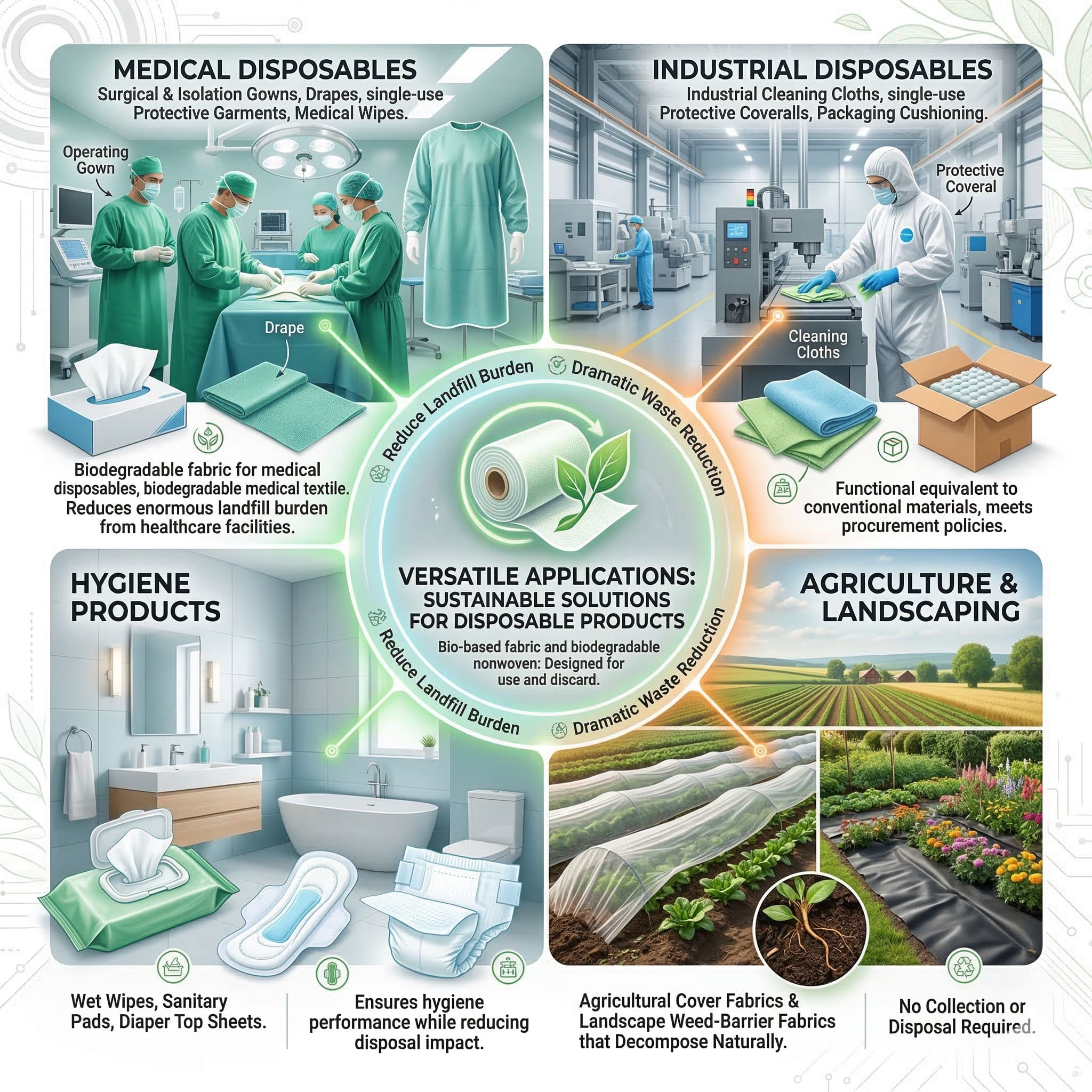
Versatile Applications: Sustainable Solutions for Disposable Products
Biodegradable fabric and biodegradable nonwoven are purpose-designed for “use and discard” scenarios, bringing sustainability to the disposable-textile category.
Medical Disposables: Surgical gowns, isolation gowns, surgical drapes, single-use protective garments, and medical wipes. This is the core application for biodegradable fabric for medical disposables, biodegradable nonwoven for medical applications, and biodegradable medical textile for single-use products. Healthcare facilities generate enormous volumes of disposable textile waste daily—biodegradable materials dramatically reduce landfill burden. Also ideal as biodegradable disposable nonwoven for healthcare and eco-friendly nonwoven for medical use.
Industrial Disposables: Industrial cleaning cloths, single-use protective coveralls, and packaging cushioning. Biodegradable fabric for industrial disposables and biodegradable nonwoven for protective disposables deliver functional performance equivalent to conventional materials while meeting corporate sustainable-procurement policies. Also serves as sustainable disposable fabric for industrial applications.
Hygiene Products: Wet wipes, sanitary pads, and diaper top sheets. Biodegradable material for hygiene products ensures hygiene performance while reducing the environmental impact of product disposal. A proven biodegradable nonwoven for wipes and disposables.
Agriculture & Landscaping: Agricultural cover fabrics and landscape weed-barrier fabrics that decompose naturally after use—no collection or disposal required.
Partner with Fone Tai—Build a Greener Future Together
Choosing Fone Tai’s biodegradable fabric and biodegradable nonwoven is the key decision for making disposable products sustainable. As hospitals and industrial enterprises raise their sustainable-procurement standards, biodegradable disposable materials are becoming the new market baseline.
Fone Tai offers a comprehensive biodegradable material platform—multiple polymers, multiple nonwoven and woven constructions, fully customizable specifications—so brands in medical, industrial, hygiene, and agricultural applications can find the right biodegradable solution for their exact disposable-product needs.
As a trusted biodegradable textile manufacturer offering full OEM / ODM customization, Fone Tai is ready to develop the right specification for your application.
Get in touch with Fone Tai today to explore custom biodegradable fabric and nonwoven solutions, request samples, and discuss your specification requirements. Let us be your trusted partner in building a more sustainable—and more successful—future.